
AI Color Analysis for Fashion Brands: Find Your Palette and Convert More Shoppers
huhu.ai Team
Colour is the first thing a shopper notices on a product page — before fit, before fabric, before price. Research from the Seoul International Colour Expo found that up to 85 percent of consumers cite colour as the primary reason they buy a particular product. In fashion ecommerce, where customers cannot touch or try on garments, colour accuracy and appeal carry even more weight. A dress that looks washed-out on screen will not sell, no matter how flattering the cut.
AI colour analysis is changing how fashion brands approach this challenge. Instead of relying on gut instinct or last season's bestsellers, brands can now use machine learning to analyse colour trends, predict which palettes will resonate with their audience, and — critically — visualise those colours on realistic AI models before committing to production. In this guide, we will break down how AI colour analysis works, why it matters for conversion rates, and how to use it alongside HuHu AI's virtual try-on to build a colour strategy that actually sells.
What Is AI Colour Analysis?
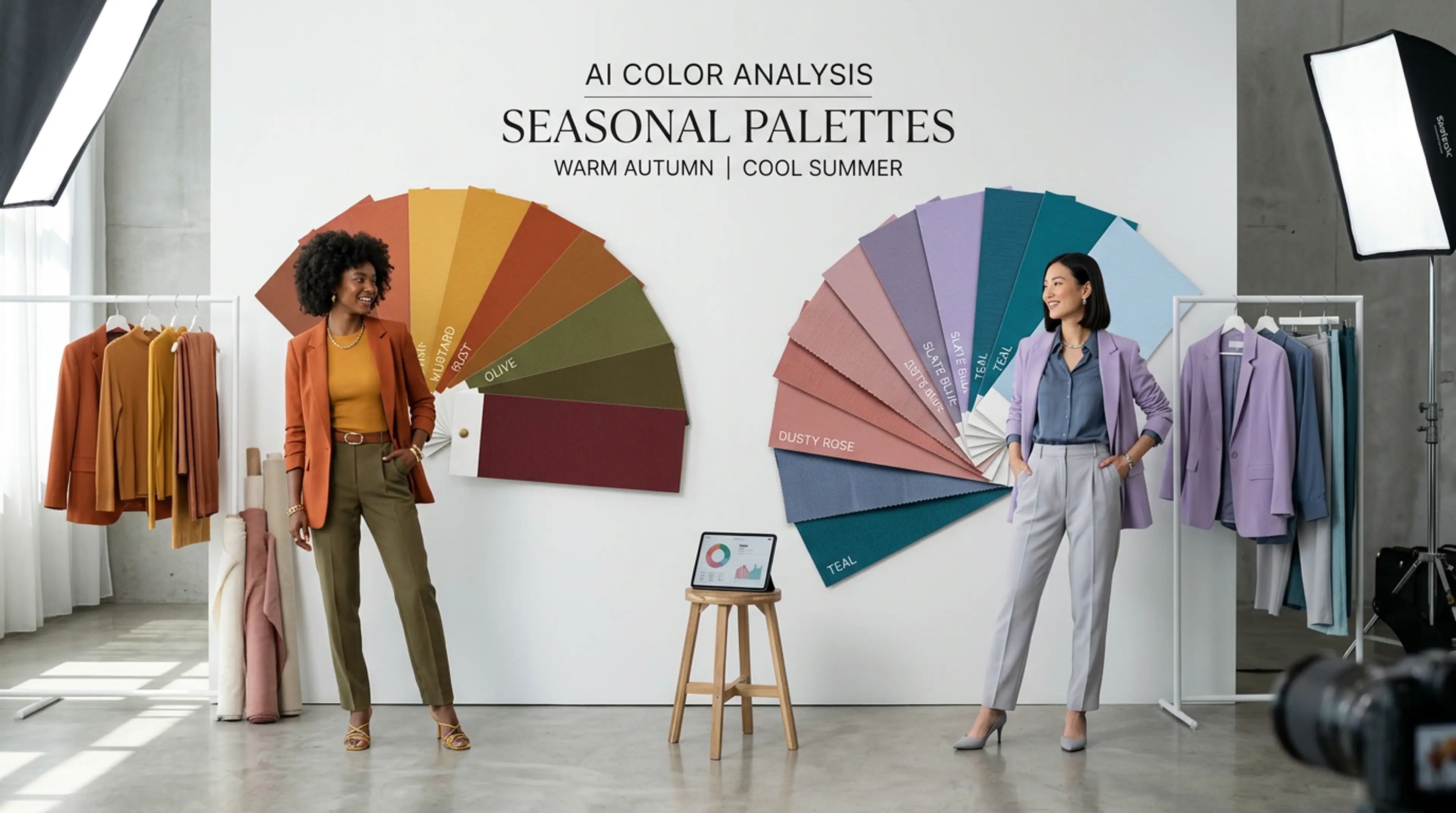
AI colour analysis uses machine learning algorithms to extract, categorise, and recommend colours from images, datasets, or trend signals. In the consumer space, it has exploded as the 'seasonal colour analysis' trend on TikTok — where AI tools determine whether someone is a 'warm autumn' or 'cool summer' based on their skin tone, hair colour, and eye colour. For fashion brands, the applications go much deeper.
At the brand level, AI colour analysis can:
- Extract dominant and accent colours from competitor product pages to map market positioning.
- Analyse social media trend data to identify emerging colour preferences before they peak.
- Cross-reference colour choices with conversion data to identify which hues drive the highest add-to-cart rates.
- Generate photorealistic colourway variations on existing garments — eliminating the cost of lab dips for exploratory colour testing.
Why Colour Strategy Drives Ecommerce Conversions
The data on colour's impact on purchase behaviour is striking. A study published in Management Decision found that 62 to 90 percent of snap judgements about products are based on colour alone. In fashion, this translates directly to revenue: offering the right colourways in the right season can mean the difference between a bestseller and a markdown.
Colour also drives returns. When a customer receives a garment whose colour does not match what they saw on screen, it goes back. Shopify's 2025 ecommerce returns report found that 'item not as described' — which frequently means colour mismatch — accounts for roughly 22 percent of all fashion returns. Better colour representation on your PDP directly reduces return rates.
Then there is the discovery angle. Seasonal colour analysis content is surging on social platforms — #coloranalysis has over 3 billion views on TikTok. Brands that align their product photography and colour language with these consumer trends capture attention and organic traffic that competitors miss entirely.
How to Use AI Colour Analysis in Your Fashion Brand
Here is a practical framework for integrating AI colour analysis into your product development and ecommerce workflow:
1. Audit Your Current Colour Performance
Start by pulling sales data by colourway. Which colours have the highest conversion rate? Which have the highest return rate? Most Shopify and Amazon sellers have this data but never slice it by colour. AI analytics tools can automate this — extracting dominant colour from product images and mapping it against conversion metrics to surface patterns you would miss manually.
2. Analyse Competitor Colour Positioning
Use AI image analysis to scan competitor product pages and extract their colour palettes. This reveals gaps: if every competitor in your category is selling navy, black, and grey basics, there may be an opportunity to capture the shopper looking for terracotta, sage, or butter yellow. Tools like Heuritech and Edited provide trend forecasting with colour breakdowns by category and market.
3. Generate Colourway Variations with AI
Before ordering lab dips or committing to production colourways, use AI to generate photorealistic variations of your garment in different colours. This visual exploration costs nothing and takes minutes — versus weeks and hundreds of dollars for physical fabric samples. You can test 10 colourways visually before narrowing to the 3 or 4 you will actually produce.
4. Visualise Colours on Diverse Models with HuHu AI
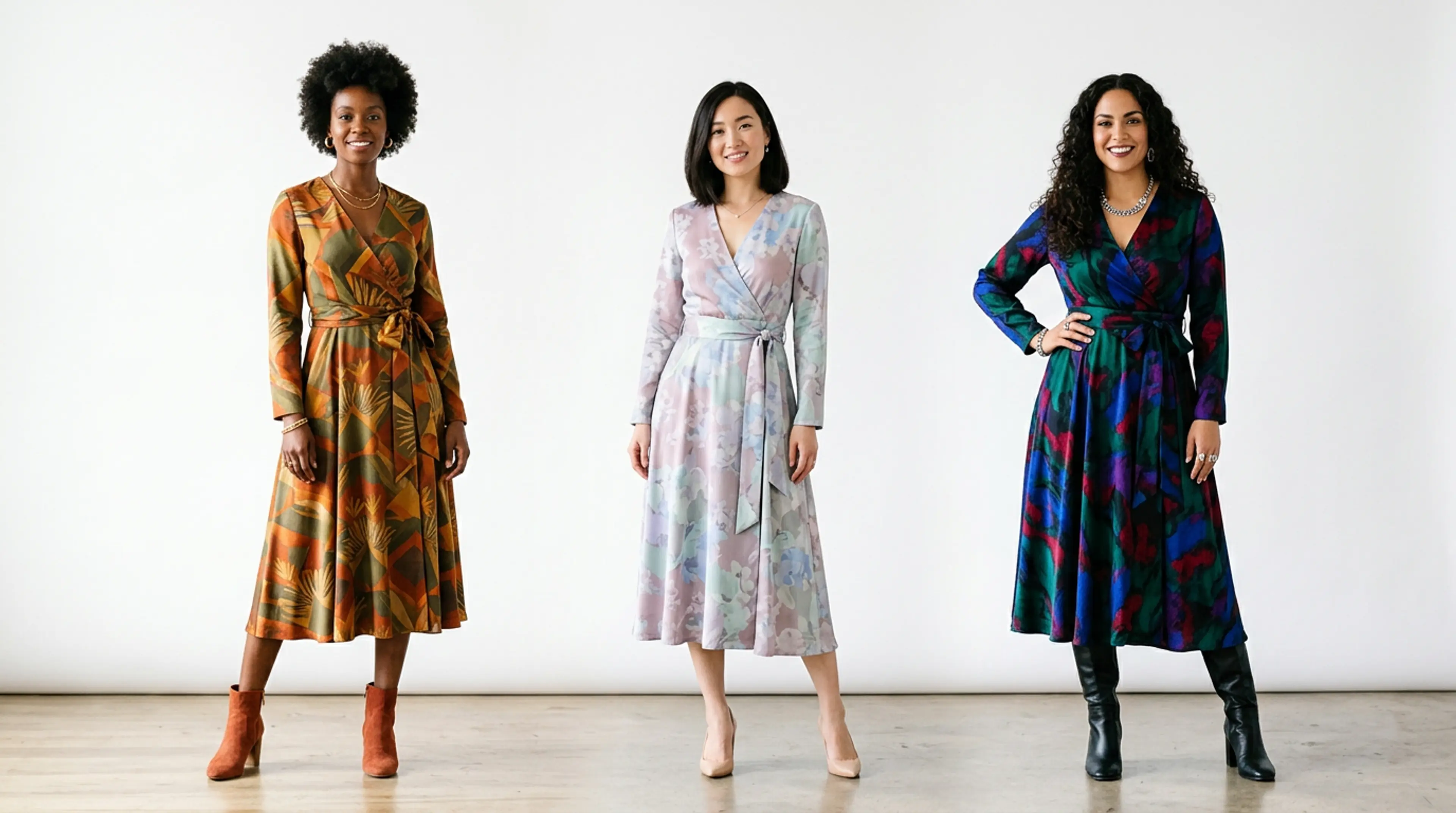
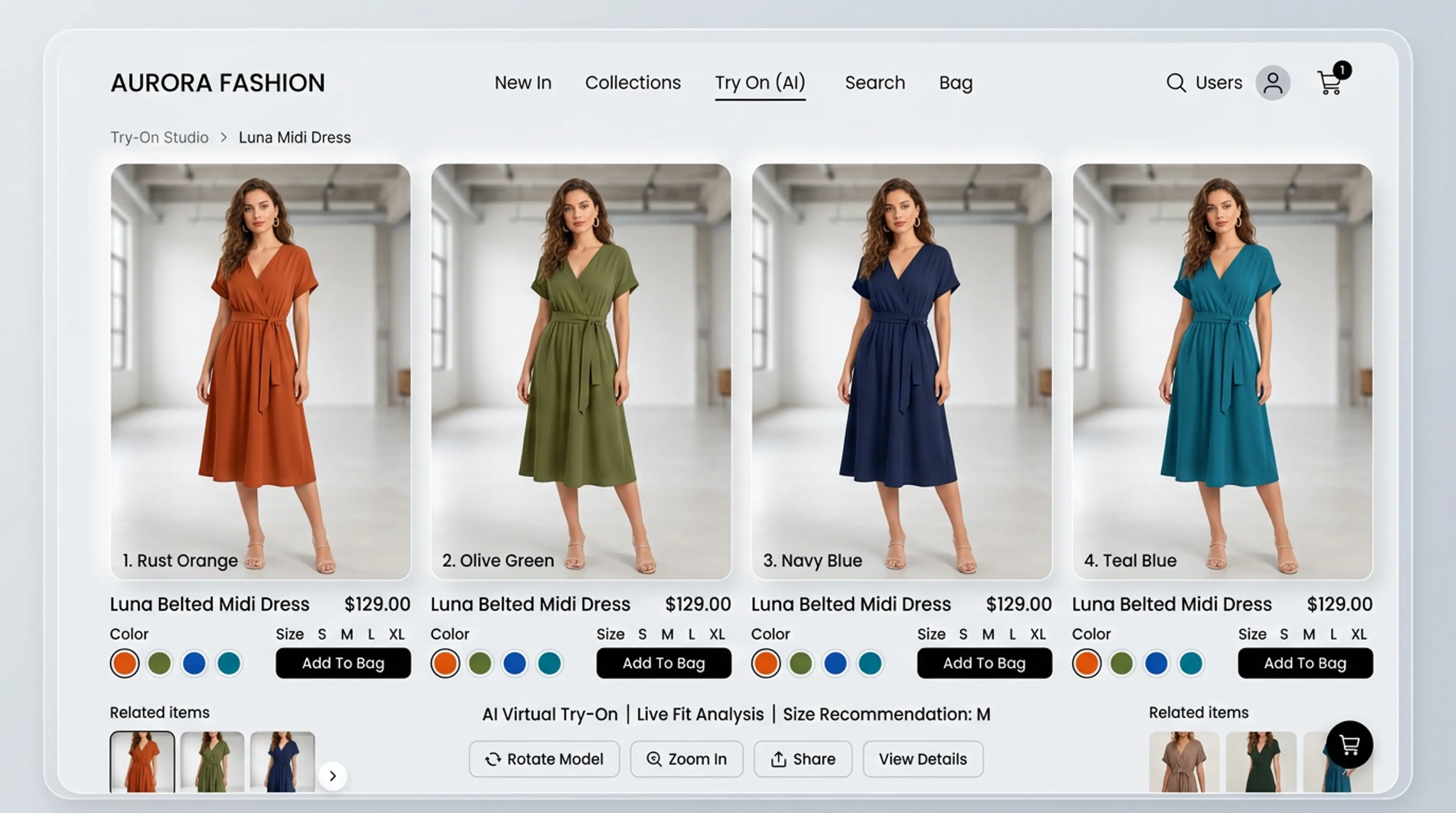
This is the critical step most brands skip. A colour that looks stunning on a white background flat lay might look entirely different on a model with warm-toned skin versus cool-toned skin. HuHu AI's virtual try-on lets you see every colourway on over 50 diverse AI models — different skin tones, body types, and styling contexts — so you can evaluate how each colour photographs across your full customer base.
Use single try-on mode to test individual colourways or bulk try-on to run your entire palette across the model roster in one session. The output is publication-ready — meaning these images can go straight to your Shopify PDP, saving you both the colour decision time and the photography cost.
5. Test and Iterate with Real Data
Once your AI-generated colourway images are live on your store, measure performance by colour. A/B test hero images in different colourways. Track which colour variants get the most clicks in collection pages. Feed this data back into your next season's colour planning — creating a continuous improvement loop that gets smarter every cycle.
Seasonal Colour Analysis: From TikTok Trend to Brand Strategy
The seasonal colour analysis trend — categorising individuals as Spring, Summer, Autumn, or Winter based on their natural colouring — is one of the biggest fashion content movements in recent years. For brands, this is not just a TikTok trend to observe; it is a conversion opportunity to exploit.
Consider this: a customer who has just discovered they are a 'deep autumn' is actively searching for garments in warm terracotta, olive, burnt sienna, and mustard. If your product page shows that exact garment on a model with similar colouring, you have removed every friction point between discovery and purchase. HuHu AI makes this possible at scale — generate the same dress on models representing all four seasonal palettes and let the shopper self-select.
Brands that tag their products by seasonal colour type in metadata and alt text also capture organic search traffic from shoppers searching terms like 'warm autumn dresses' or 'cool summer workwear' — long-tail queries with high purchase intent and low competition.
AI Colour Analysis Tools for Fashion Brands
The tooling landscape for AI colour analysis is maturing quickly. Here are the key categories:
- Trend forecasting — Heuritech and WGSN use AI to predict colour trends months ahead by analysing social media imagery and runway shows.
- Palette extraction — tools like Coolors and Adobe Color can extract palettes from competitor images, mood boards, or trend reports.
- Colourway visualisation — AI image generators can recolour garments photorealistically for virtual sampling before lab dips.
- On-model colour validation — HuHu AI's virtual try-on shows every colourway on realistic AI models across diverse skin tones, body types, and lighting conditions.
The ROI of Getting Colour Right
Let us put some numbers to this. If your brand sells 50 SKUs across 4 colourways each, that is 200 product page variants that need photography. Traditional on-model shoots for 200 images might cost $10,000 to $30,000 and take 2 to 3 weeks. With HuHu AI's virtual try-on, you can generate all 200 on-model images from flat lays in a single afternoon — at a fraction of the cost.
But the bigger ROI is in the colour decisions themselves. Brands using AI colour analysis to inform their palette selection report higher sell-through rates, lower markdowns, and fewer returns due to colour mismatch. When you combine data-driven colour selection with AI-powered on-model photography, you create a product page that is both analytically optimised and visually compelling — the two things that drive ecommerce conversion.
See Your Colours on Real Models — Start Free
Upload your garment in any colourway to HuHu AI and see it on over 50 diverse AI models in minutes. Use single try-on for individual tests or bulk mode to validate an entire colour range at once. Your first 10 images are free — no studio, no photoshoot, no waiting.
Related Articles
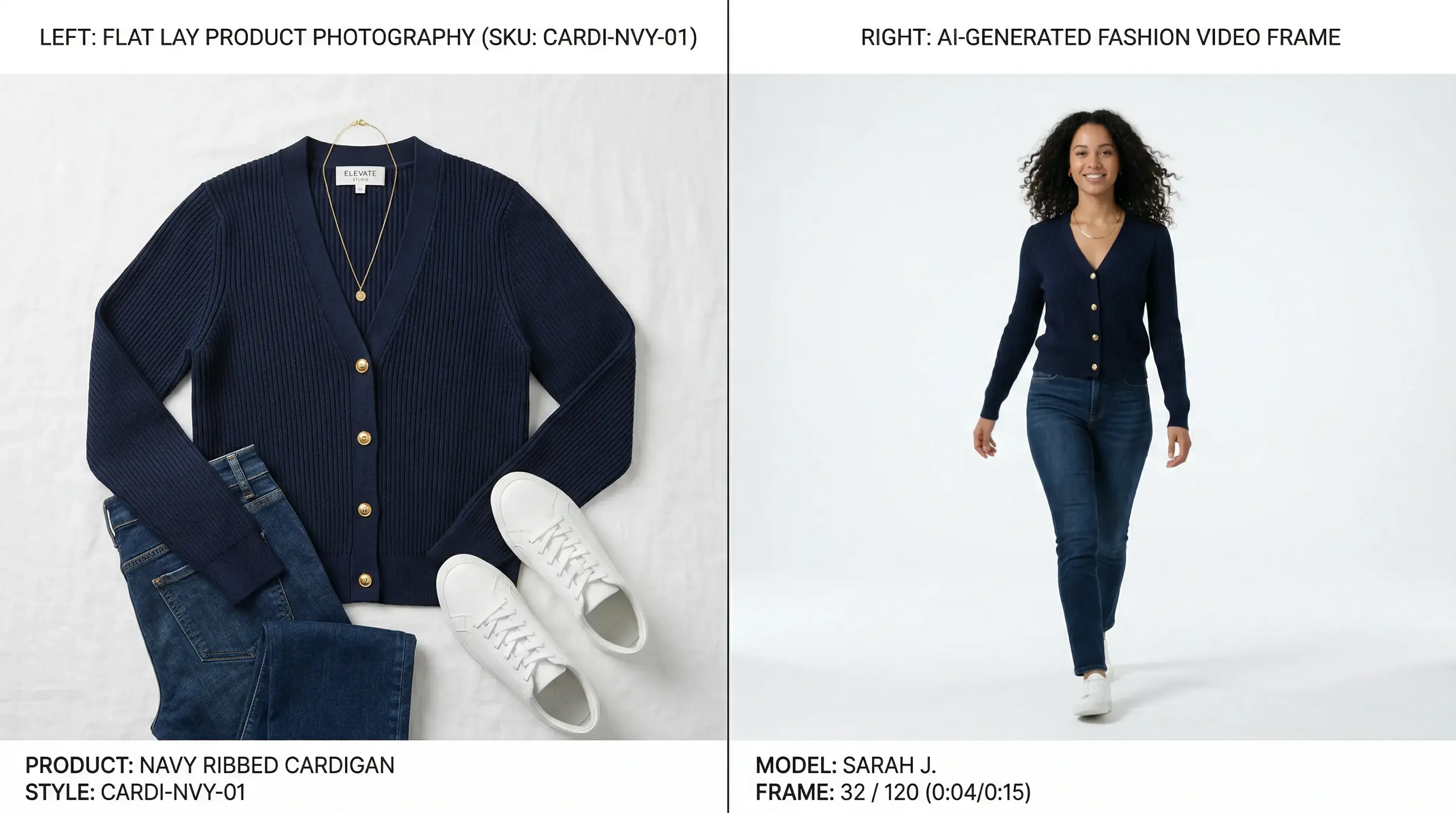
AI Clothing Video Generator: How to Create Fashion Videos Without a Studio
Learn how an AI clothing video generator lets fashion brands create scroll-stopping product videos in minutes — no studio, no crew, no budget blowout.
Read More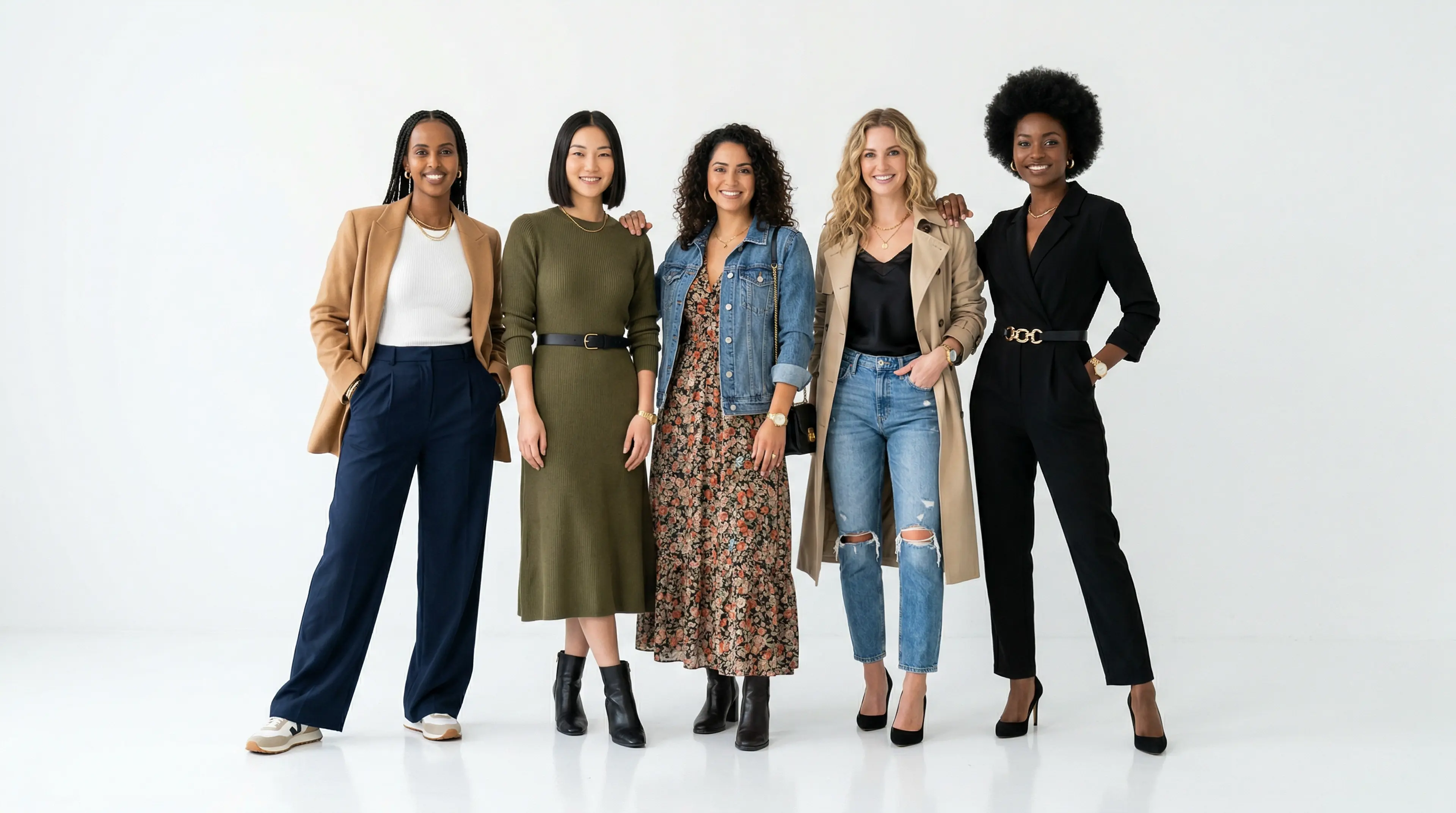
AI Fashion Models for eCommerce: The Complete Guide (2026)
Everything eCommerce brands need to know about AI fashion models — how they work, why they outperform ghost mannequins, and how to put your clothing line on a professional model in...
Read More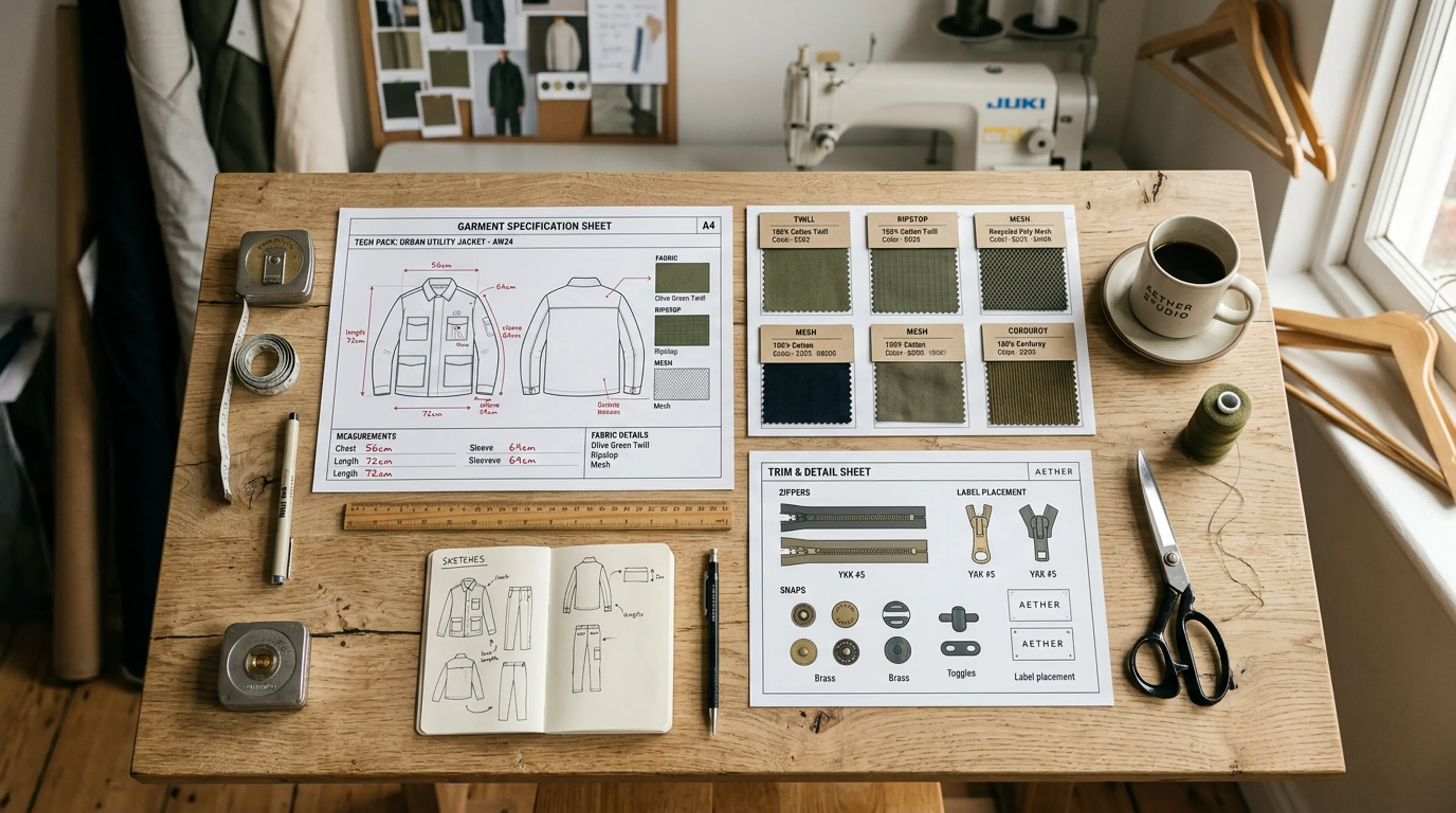
How to Create a Fashion Tech Pack with AI: The Complete Guide for Brands
Tech packs are the blueprint every fashion brand needs before production — yet most teams still build them manually. Learn how AI tools are transforming the spec-to-shelf pipeline...
Read More